Why Employee Ownership Matters
- Saves jobs: Employee buyouts can keep viable companies from closing or being sold for parts. Business owner retirement is one of the leading causes of avoidable job losses in North Carolina, and many of these closures can be prevented by selling to their employees.
- Builds wealth: Employee-owned companies often pay better, offer more opportunities to build long-term wealth, and provide employees more say over how their companies are run.
- Keeps companies locally owned: Many employee-owned businesses are more deeply rooted in their communities than companies controlled by remote owners. Locally owned companies are often harder for other states of cities to lure away with incentives and more likely to reinvest profits within their local community.
Types of Employee-Owned Companies
Worker-Owned Cooperatives
Business entities with binding bylaws and operating procedures that determine how management is shared among some or all employees. The worker-owned cooperative structure is still most common for smaller firms, but it has proven successful even for large companies with hundreds or thousands of employees.
Employee Stock Ownership Plan (ESOP)
Benefit plan that allows employees to acquire ownership stakes in their company. Regulatory requirements, tax advantages, and familiarity within legal and accounting professionals lead most medium and larger companies to convert through an ESOP. While not all ESOPs are democratically governed, there are a variety of ways to provide employees an active voice in managing the firm, such as electing representatives to sit on the company’s board of directors and/or developing an ESOP committee.
Other employee ownership structures
Companies employ a range of other employee ownership structures including, employee stock purchase plans, phantom stock, and other broad-based employee stock option plans.
Business entities with binding bylaws and operating procedures that determine how management is shared among some or all employees. The worker-owned cooperative structure is still most common for smaller firms, but it has proven successful even for large companies with hundreds or thousands of employees.
Employee Stock Ownership Plan (ESOP)
Benefit plan that allows employees to acquire ownership stakes in their company. Regulatory requirements, tax advantages, and familiarity within legal and accounting professionals lead most medium and larger companies to convert through an ESOP. While not all ESOPs are democratically governed, there are a variety of ways to provide employees an active voice in managing the firm, such as electing representatives to sit on the company’s board of directors and/or developing an ESOP committee.
Other employee ownership structures
Companies employ a range of other employee ownership structures including, employee stock purchase plans, phantom stock, and other broad-based employee stock option plans.
Read the Research
|
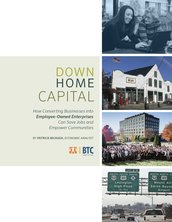
Down Home Capital
Download a PDF of the report, "Down Home Capital: How Converting Businesses into Employee-Owned Enterprises Can Save Jobs and Empower Communities," to learn more. |
|
Employee Owned America
Check out their newsletter on employee ownership! |

|
The ESOP Association
This association Carolina's Chapter of the ESOP association is one of 18. The ESOP association provides educational services and resources to member companies in North Carolina and South Carolina. Data and Statistics Results of research and analysis done on ESOP organizations |

|
The National Center of Employee Ownership
A membership organization that providing resources and education on employee ownership. |
|
North Carolina Cooperative Council
Association of North Carolina electrical cooperatives, Check cooperatives, credit unions, telecom cooperatives, employee owned cooperatives, and agricultural cooperatives. |

|
Employee Owned Operations of America
A membership organization to encourage and expand retirement savings by giving American workers the opportunity to have equity in the companies where they work. |
|
US Federation of Worker Owned Cooperatives
National association of worker owned cooperative businesses |